Fireplace and Chimney Service in Centennial, Colorado
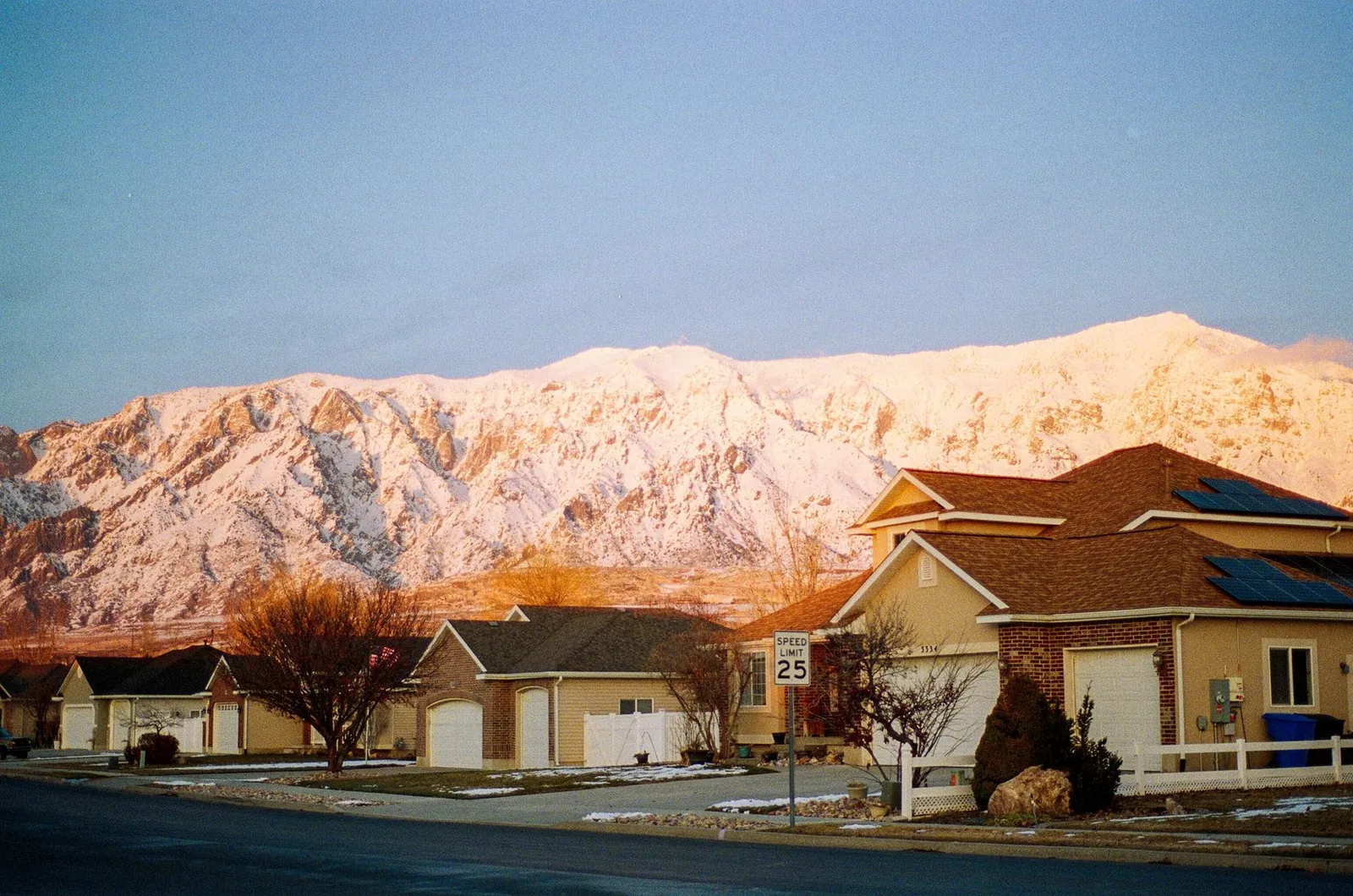
Centennial became a city in 2001, but most of its homes went up in the 1970s, '80s and '90s. We inspect the fireplaces and chimneys here for free.
Centennial is young as a city and older as a place. Voters approved incorporation in September 2000 with 77 percent support, and the city was formed on February 7, 2001, from unincorporated Arapahoe County, including the former Castlewood and Southglenn areas. With more than 100,000 people at the time, it was the largest incorporation in U.S. history. The name marks Colorado's statehood in 1876, the centennial of the Declaration of Independence. The 2020 census counted 108,418 residents, the 11th-largest city in Colorado.
The houses came long before the city. Census figures (ACS 2024) show about 40 percent of Centennial homes built from 1960 to 1979 and 43 percent from 1980 to 1999, with only 14 percent since 2000. Gas heats 77 percent of homes, a higher share than any other metro city in the Census figures we checked. So most fireplaces here are 25 to 60 years old: some brick wood-burners, some early factory-built units, many already switched to gas. Each wears out in its own way, and the free inspection tells you which you have.
Built before the 1993 rule
Since January 1, 1993, Colorado law (C.R.S. 25-7-407) has required any new or remodeled fireplace in the metro's wood-burning restriction area to be a gas appliance, an electric device, or a fireplace or insert that meets the state's strictest wood-stove emission standards. About two-thirds of Centennial homes were built before 1990, so many still have the open wood-burning fireplace they came with.
Those can be used on ordinary days but not on air-quality Action Days, November through March. The state health department's FAQ allows an open fireplace on those days only with gas logs, an EPA Phase III insert, an approved pellet insert or an electric device. Gas logs typically run $500 to $2,000, a gas insert $2,000 to $8,000, and an EPA wood insert with its liner $3,000 to $7,000.
Gas fireplaces that have run for decades
With gas heating three of every four homes, many Centennial fireplaces burn gas, and some of those units have been in place for decades. Thermocouples and igniters wear out, pilot assemblies clog, and burners that were never set up for altitude soot the glass. Gas appliances typically lose about 4 percent of their input for every 1,000 feet above 2,000 feet, roughly 13 percent at Denver's elevation. A yearly service typically runs $150 to $350, a pilot, thermocouple or igniter repair $100 to $350, and a valve or control board $300 to $1,000.
Caps, crowns and hail
The Front Range sits in what forecasters call Hail Alley, and NOAA says the area where Colorado, Nebraska and Wyoming meet averages seven to nine hail days a year. On a brick chimney we check the crown and cap; on a factory-built one, the chase cover. A cap typically runs $250 to $850, a chase cover $300 to $700 and a crown $600 to $2,200. We photograph hail damage so you can hand it to your adjuster.
Where we work in Centennial
Southglenn · Castlewood Farm · Willow Creek · Homestead in the Willows · Walnut Hills · Cherry Knolls · Foxridge · Knolls · Heritage Greens · Piney Creek · Trail's Edge
FAQ
Centennial chimney questions
My Centennial house is from the 1980s. Is the fireplace wood or gas?
It could be either, and some started as wood and were converted later. We check the firebox, damper, flue and any gas line at the free inspection and tell you exactly what you have.
Can I switch my wood fireplace to gas?
Yes. Gas heats most Centennial homes, so a gas line is often close by. Gas logs typically run $500 to $2,000, a sealed gas insert $2,000 to $8,000, and a full wood-to-gas conversion $1,500 to $8,000. Most metro cities require a permit for a new gas line or appliance, and we pull it.
What happens if I burn wood on a no-burn day?
Most local governments in the restricted area enforce the ban through their own ordinances, and the state enforces it where there is none, so penalties depend on where you live. From November through March, check the 4 p.m. forecast or call 303-758-4848 before lighting a wood fire.
Is the inspection really free?
Yes. We check the chimney from the roof and from inside, take photos and write down a price for anything that needs doing, including cleaning, before any work starts.
Book online
Book in Centennial. The inspection is free.
Free inspection in a 3-hour window: 8 to 11, 11 to 2, or 2 to 5. We call to confirm before we arrive.