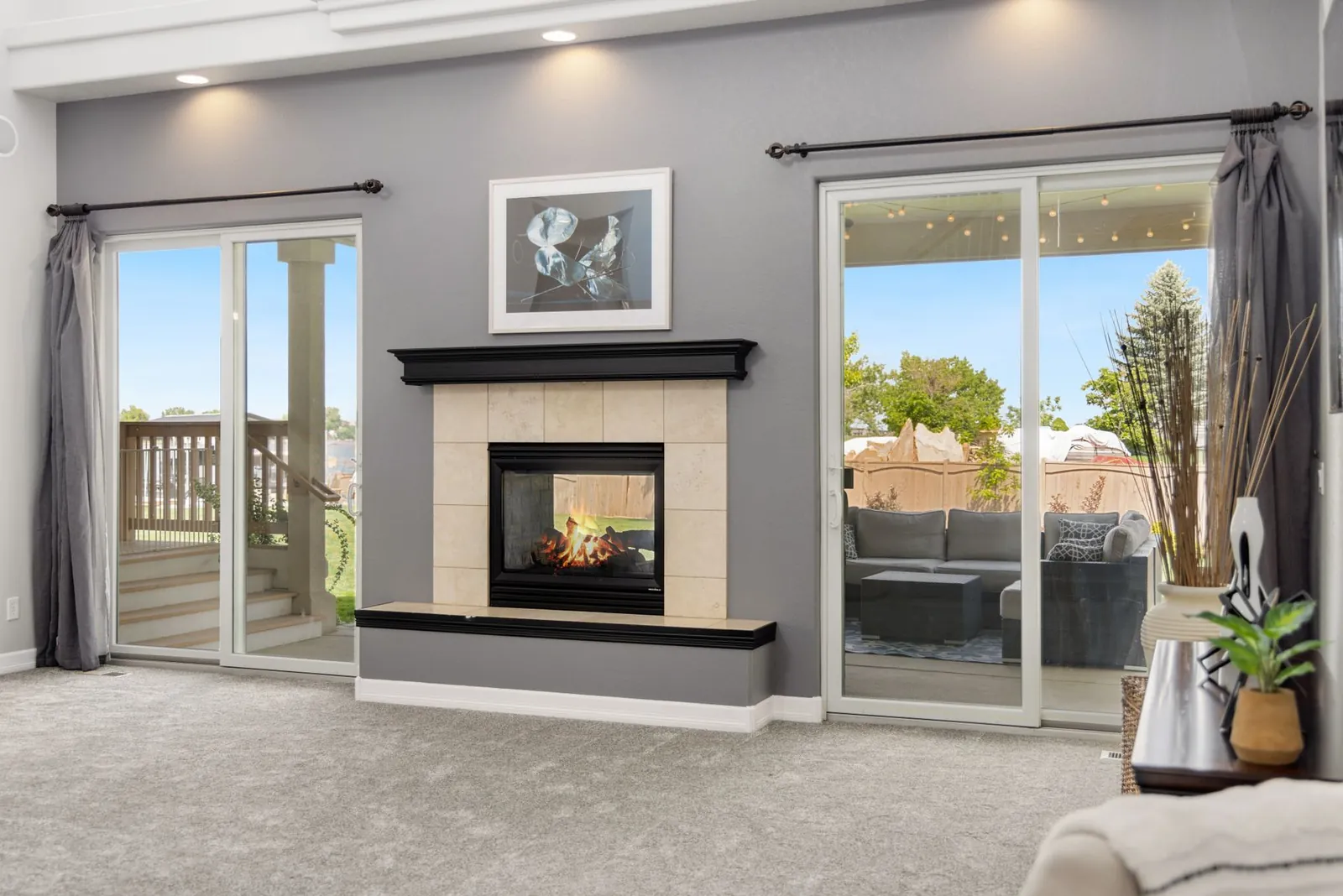
Convert Your Wood Fireplace to Gas in Denver
We run the gas line, install vented logs or a sealed insert, and set it up for Denver's altitude. Most wood-to-gas conversions run $1,500 to $8,000 all in.
Most people who convert are tired of three things: hauling and storing wood, cleaning ash, and checking whether today is a no-burn day. In the Denver metro, wood is the main heat source in almost no homes, while gas heats 61 to 77 percent of them. That usually means a gas line is already in the basement or crawlspace, and getting it to the fireplace is a manageable job.
A conversion is more than dropping logs in the firebox. The chimney is swept and checked, a gas line and shutoff are run under permit, the damper is set for vented logs or the flue is relined for an insert, and the burner is set up for altitude. Most conversions land between $1,500 and $8,000, depending on logs or insert and the gas run.
Signs you need this
- You rarely burn wood anymore because of the work
- You want to use the fireplace on Action Days
- The fireplace smokes or drafts poorly with wood
- You are selling and want a turnkey fireplace
- A gas furnace or water heater is close to the fireplace wall
How we do it
- Free conversion visitWe inspect the chimney, measure the firebox and trace the closest gas line, then write up both the log and insert options with prices.
- Prepare the chimneyThe flue is swept before gas goes in. Cleaning is priced at the inspection. Any cracked tiles or a bad crown are fixed first.
- Run gas and installA new gas line with an accessible shutoff runs to the firebox under permit, then the logs or insert and venting go in.
- Set for altitude and testWe set the burner for your elevation per the maker, leak-test every joint and check the CO alarm requirement.
Logs or insert for a conversion?
Vented gas logs are the lower-cost conversion and keep the open-fireplace look, but the damper stays open and much of the heat goes up the flue. A sealed direct-vent insert costs more and changes the look to a glass front, but it actually heats the room. Gas logs alone typically run $500 to $2,000 and a gas insert $2,000 to $8,000, before any gas line work.
Is a converted fireplace allowed on no-burn days?
Yes. Denver's code does not count natural gas-fired devices as solid-fuel devices, and the CDPHE FAQ lists gas logs as one way an open masonry fireplace can be used on an Action Day. Once you convert, the 4 p.m. forecast no longer decides whether you get a fire.
What paperwork comes with it?
Most metro cities require a permit for a new gas line or gas appliance, and we check that before the job. Under C.R.S. 38-45-102, permitted work that replaces or adds a fuel-fired appliance means the home needs a working CO alarm within 15 feet of each bedroom. We check that before we leave.
FAQ
Wood-to-Gas Conversion questions
How much does it cost to convert a fireplace to gas in Denver?
Most wood-to-gas conversions run $1,500 to $8,000. The low end is vented logs with a short gas run, and the high end is a sealed insert with liners and a longer gas line.
Can I go back to wood later?
With gas logs, the logs and gas line can be removed and the chimney checked before wood use. With an insert, you would remove the insert and its liners. Any new wood device would have to meet current certification rules.
Do I need my chimney cleaned before converting?
Yes. Old soot and creosote should come out before gas goes in. The cleaning is priced at the free inspection, along with the conversion.
Does a gas fireplace need yearly service?
We recommend a yearly check. Service typically runs $150 to $350 and covers the pilot, burner, logs, vent and a gas leak check.
How long does a conversion take?
Usually one to two days, depending on the gas line run, plus time for the city inspection on the permit.
Related
Stoves, inserts and gas
Book online
Pick a day. We'll bring a ladder.
Free inspection in a 3-hour window: 8 to 11, 11 to 2, or 2 to 5. We call to confirm before we arrive.