Galvanized vs stainless chase covers: which holds up to Denver hail?
Stainless. Most builder chase covers are thin galvanized steel; once hail dents them and water pools, the zinc coating wears through and they rust, staining siding and leaking into the chase. A 24-gauge type 304 stainless cover with a sloped or cross-broken top sheds water and doesn't rust through.
Denver Fireplace & Chimney · October 16, 2026
What a chase cover does
If your fireplace was built into a newer home, the chimney is probably not brick. It is a metal flue pipe running up inside a wood-framed box clad in siding or stucco, called a chase. The top of the chase is closed by a sheet-metal pan, the chase cover, with a hole and collar for the flue to pass through.
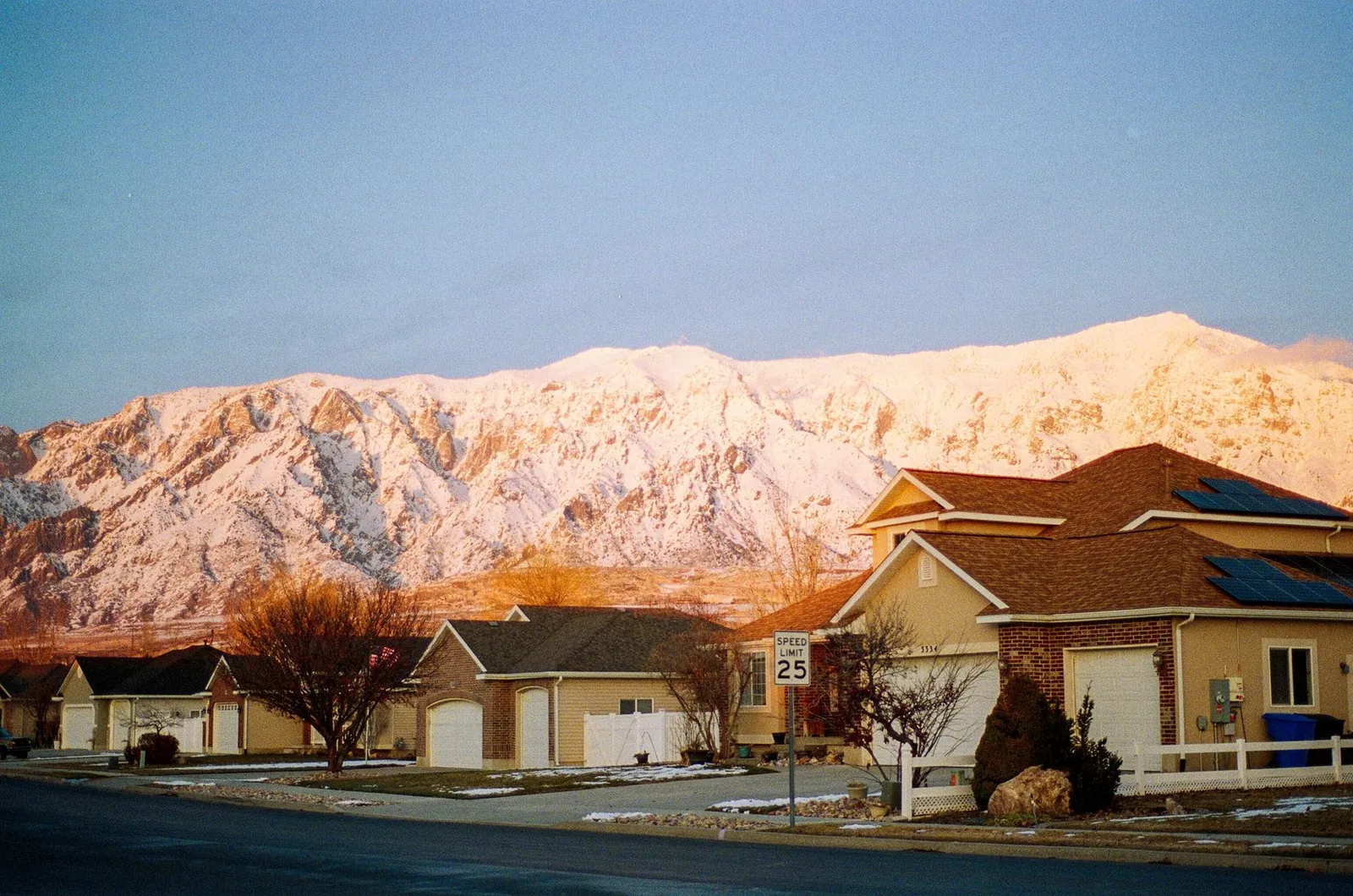
This is the standard setup across the newer suburbs we serve. Census ACS data puts the median home in Highlands Ranch and Thornton at 1997, Broomfield at 2002, and Parker and Lone Tree at 2004. Those neighborhoods are full of chase covers, and every one of them sits in hail alley, which NOAA's National Severe Storms Laboratory says averages seven to nine hail days a year.
How galvanized covers fail
Builders usually install galvanized steel covers, often in thin 26 to 28 gauge. Galvanized steel is ordinary steel with a zinc coating. That works while the coating is intact and the water runs off. Hail changes both. Each dent becomes a small bowl, and many builder covers were close to flat to begin with, so water sits on them after every storm and snowmelt.
Standing water wears through the zinc, and the steel underneath rusts. The first thing most owners notice is an orange streak running down the siding from the top of the chase. Next comes rust on the top of the firebox or in the fireplace, then water inside the chase. Water in a framed chase is worse than water on brick because the framing and sheathing can rot before anything shows inside the house.
Painting a rusted galvanized cover buys a season or two. It doesn't fix the dents that hold water.
What stainless changes
Type 304 stainless steel doesn't rely on a coating. It resists rust through the whole thickness of the metal, so a scratch or a dent doesn't start a rust spot. We recommend 24 gauge, which is heavier than most builder covers and holds its shape better when hail hits.
Stainless is not hail-proof. A big storm can still dent it. The difference is what happens after: a dented stainless cover won't rust through, and if it is shaped to drain, the dent doesn't turn into a pond. Copper is another option that won't rust and that some owners like for its look, but it is softer and shows dents more easily.
Shape matters as much as metal
A stainless cover cut flat to the same pattern as the old one will still hold water. When we measure for a replacement, we look for these details:
- A sloped or cross-broken top, creased from the corners toward the edges, so water runs off instead of sitting.
- A skirt that drops down over the siding on all four sides, with a folded drip edge so water drips clear of the wall instead of running back underneath.
- A raised collar around the flue hole, so water on the pan can't run straight down the pipe.
- A storm collar sealed around the flue pipe above the cover.
- Fasteners through the skirt into the side of the chase, not through the top, where every screw is a leak point.
Replace or repair?
Replace when the cover is rusted through, when dents hold water you can see after rain, or when the siding below shows rust streaks. Repair is reasonable when a cover is sound but a sealant joint at the collar has failed. A replacement chase cover typically costs $300–$700 installed, and a new cap for the top of the flue is typically $250–$850 if hail damaged that too.
If the cover is coming off after a hailstorm, we photograph the old one and the damage before removal so your adjuster can see it. We don't promise what insurance will pay; coverage depends on your policy.
Check the chase while we are up there
Rust on the cover is often a sign that water has already been getting in. During our free inspection we look at the cover, the cap, the flue collar and the inside of the firebox for water, and we photograph what we find. You get a written price before any work, and we book Sunday to Friday in 3-hour windows.
FAQ
More answers
Why is there rust running down my siding?
Almost always from the chase cover at the top. Once hail dents a galvanized cover and water pools, the coating fails and rust washes down the wall.
Is stainless worth it over galvanized?
In hail country, usually yes. Stainless 304 won't rust through after dents or scratches, so dents and scratches don't start rust spots.
Can I just paint my rusty chase cover?
Paint slows rust for a while but doesn't remove the dents that hold water. If the cover is rusted through, it needs replacing.
Do I need a new chimney cap too?
Not always. We check both. If hail flattened the mesh or bent the lid, the cap is replaced at the same visit, typically $250–$850.
Keep reading
More from the blog
 Is today a no-burn day in Denver?Denver no-burn days are called Action Days. How to check the 4 p.m. state forecast, the hotline number, who has to stop burning and what still runs.
 Denver fireplace rules and fines: what the code actually saysBurning on a Denver Action Day carries a $250 minimum fine, up to $2,000 per day. The code sections, what you may burn, and what can be installed.
 Hail hit your roof? Check these 4 chimney partsAfter a Front Range hailstorm, check the chimney cap, chase cover, crown and flashing. What hail damage looks like on each, and how to document it.
Book online
Pick a day. We'll bring a ladder.
Free inspection in a 3-hour window: 8 to 11, 11 to 2, or 2 to 5. We call to confirm before we arrive.