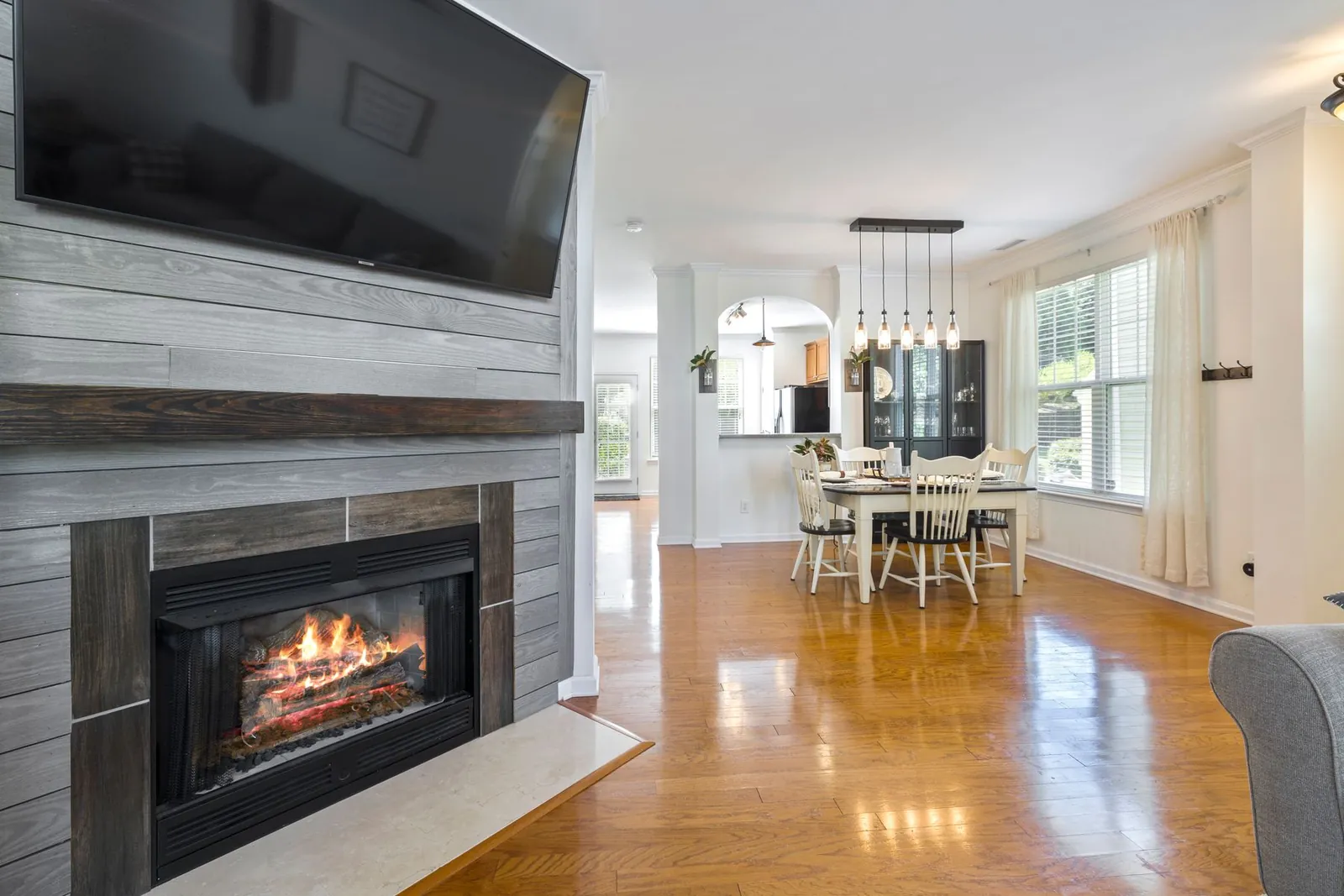
How to make an open fireplace usable on Denver no-burn days
CDPHE says an open masonry fireplace may run on an Action Day only if it has gas logs, an EPA Phase III insert, an approved pellet insert or an electric device. Gas logs ($500–$2,000) are the simplest. A gas insert ($2,000–$8,000) gives real heat. An EPA wood insert with liner runs $3,000–$7,000.
Denver Fireplace & Chimney · October 13, 2026
The rule that decides it
On an Action Day, CDPHE's FAQ says uncertified stoves, heaters and conventional fireplaces must not run in the restricted area, whatever the fuel. The same FAQ then answers the question most owners of an open brick fireplace have: it may be used on Action Days only if it is equipped with gas logs, an EPA Phase III insert, an approved pellet insert or an electric device.
That gives you four ways to keep the fireplace useful from November through March, when CDPHE says the restrictions apply. Each one changes the fireplace differently, and the right pick depends on whether you want heat, the look of a flame, or the experience of burning wood.
Option 1: gas logs
A gas log set is a burner with ceramic logs that sits in your existing firebox. It is the least change and the lowest cost, typically $500–$2,000. Denver's code says a solid-fuel-fired device does not include natural gas-fired devices, so gas logs can run on any day.
What to expect: a real flame you light with a switch or remote, but not much heat. A vented log set in an open fireplace sends most of its warmth up the chimney. Because the exhaust goes up the flue, the damper has to be fixed open, usually with a clamp, so it can never be closed on a lit burner. In a home that already has a gas line, which Census ACS data says is most homes in the metro, running gas to the fireplace is usually simple. The burner also needs to be set up for altitude, which we cover in our post on gas fireplaces at 5,280 feet.
Option 2: a gas insert
A gas insert is a sealed firebox with a glass front that slides into the masonry opening. It vents through a new liner run up the existing chimney and draws its combustion air from outside. That makes it a heater: it puts warmth into the room instead of up the chimney, and the room air stays in the room.
Typical installed cost is $2,000–$8,000 depending on size, liner run and finish. It runs on Action Days for the same reason gas logs do. For people who want heat on cold nights and a fire with no ash to clean, this is usually the answer.
Option 3: an EPA-certified wood insert
If you want to keep burning wood, an EPA-certified wood insert is the path. CDPHE lists EPA-certified Phase III stoves and inserts as exempt on Action Days. Denver code section 4-24(c)(2) allows only certified devices to be sold or installed in the city, and Colorado Regulation No. 4 has required new wood stoves sold in the state since May 15, 2020 to meet EPA's 2015 standards.
A wood insert needs a properly sized stainless liner from the insert to the top of the chimney. Typical installed cost with the liner is $3,000–$7,000. You still split, stack and haul wood, and you still have ash, but you get far more heat per log than an open fire and you can burn in winter without checking the forecast first. CDPHE's fuel rules still apply: clean, dry, untreated wood only.
Options 4 and 5: pellet and electric
A Colorado-approved pellet insert is also allowed on Action Days. Colorado approval means the model tested at under 4.1 grams of particulates per hour, per CDPHE. Pellet units feed fuel automatically and need an electrical outlet, and they need their own vent. We price a pellet insert at the free inspection, since it depends on the unit and the run.
An electric insert is the simplest of all: no gas line, no venting and no burning rules. It gives a flame effect and some heat. For someone who rarely uses the fireplace and just wants it to look alive, it can be enough.
Permits, money and where to start
Most metro cities require a mechanical or building permit to install a stove, insert or new gas line, and we check what your city requires before the job. Under Colorado law (C.R.S. 38-45-102), permitted work such as installing a fuel-fired appliance means the home needs a working carbon monoxide alarm within 15 feet of the entrance to every bedroom, so we check yours at the same time.
There is no rebate to wait for, as far as we can find. The federal 25C credit for biomass stoves ended after 2025, according to the Hearth, Patio & Barbecue Association, and we found no current Colorado or Denver change-out program.
Every option except electric depends on the chimney: its size, the condition of the flue and crown, and whether a liner will fit. Our inspection is free. We look at the fireplace and chimney top to bottom, take photos, and give you written prices for the options that fit. We book Sunday to Friday in 3-hour windows and call to confirm. In short:
- Gas logs: lowest cost, real flame, little heat. Typically $500–$2,000.
- Gas insert: real heat, sealed glass front, no ash. Typically $2,000–$8,000.
- EPA wood insert with liner: wood fires on Action Days, the most work for you. Typically $3,000–$7,000.
- Pellet insert: automatic feed, needs power. Priced at the inspection.
- Electric: no flue, no burning rules, the least heat.
FAQ
More answers
Can I use my open fireplace on a no-burn day if I burn manufactured logs?
No. CDPHE says uncertified fireplaces can't run on Action Days regardless of the fuel.
Are gas logs allowed in Denver on Action Days?
Yes. Denver's code excludes natural gas-fired devices from the definition of a solid-fuel-fired device, and CDPHE lists gas logs as one of the ways an open fireplace may be used on Action Days.
Do gas logs heat the room?
Not much. Most of the warmth goes up the chimney. If you want heat, a gas insert or an EPA wood insert does far better.
Is there a rebate for switching?
Not that we can find for 2026. The federal 25C credit ended after 2025, and no Colorado or Denver change-out program is currently listed as active.
Keep reading
More from the blog
 Is today a no-burn day in Denver?Denver no-burn days are called Action Days. How to check the 4 p.m. state forecast, the hotline number, who has to stop burning and what still runs.
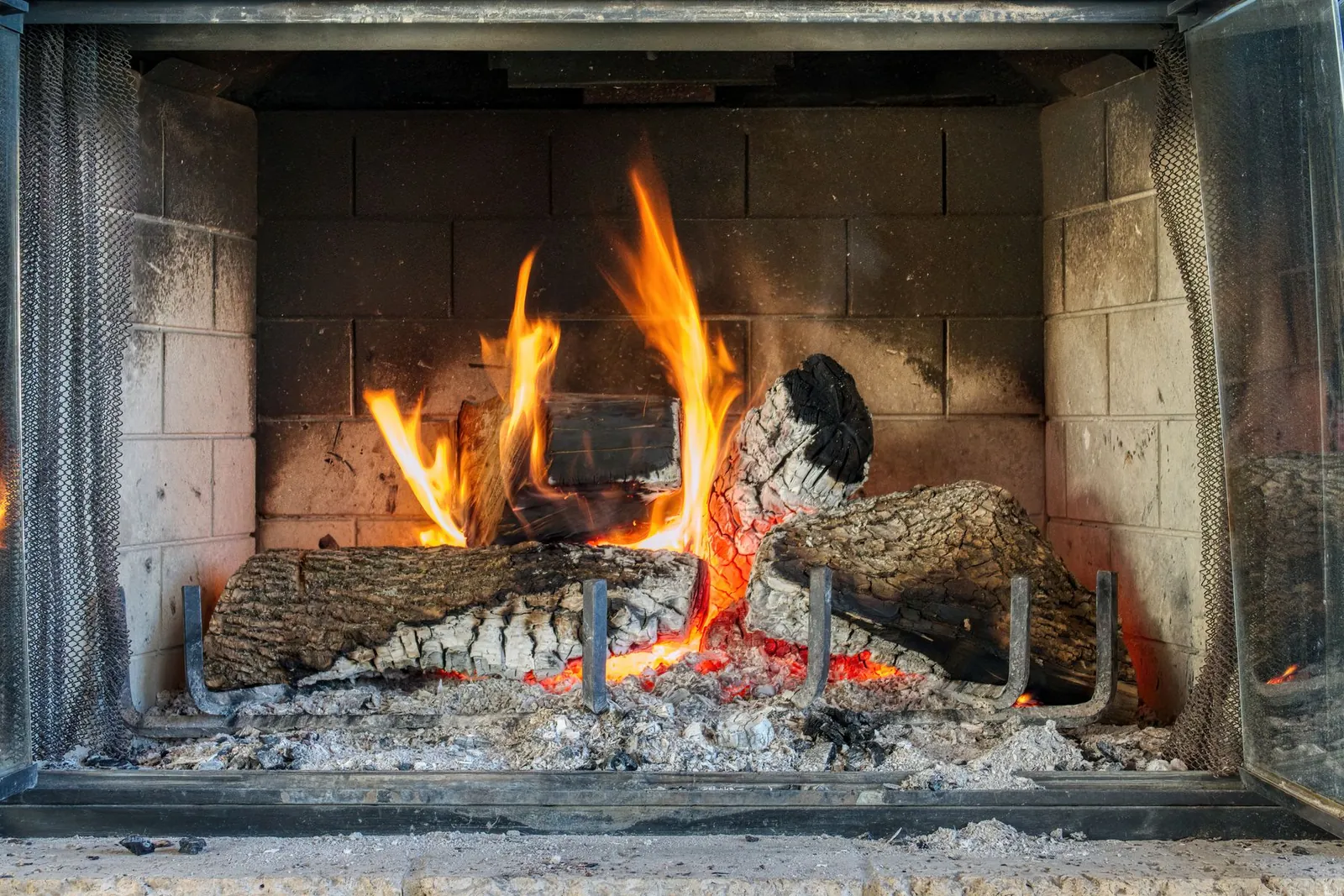 Denver fireplace rules and fines: what the code actually saysBurning on a Denver Action Day carries a $250 minimum fine, up to $2,000 per day. The code sections, what you may burn, and what can be installed.
 Hail hit your roof? Check these 4 chimney partsAfter a Front Range hailstorm, check the chimney cap, chase cover, crown and flashing. What hail damage looks like on each, and how to document it.
Book online
Pick a day. We'll bring a ladder.
Free inspection in a 3-hour window: 8 to 11, 11 to 2, or 2 to 5. We call to confirm before we arrive.