Fireplace and chimney service in Denver
One Denver home in six was built before 1940. We work on their brick chimneys, the city's gas fireplaces and everything hail breaks, starting with a free inspection.
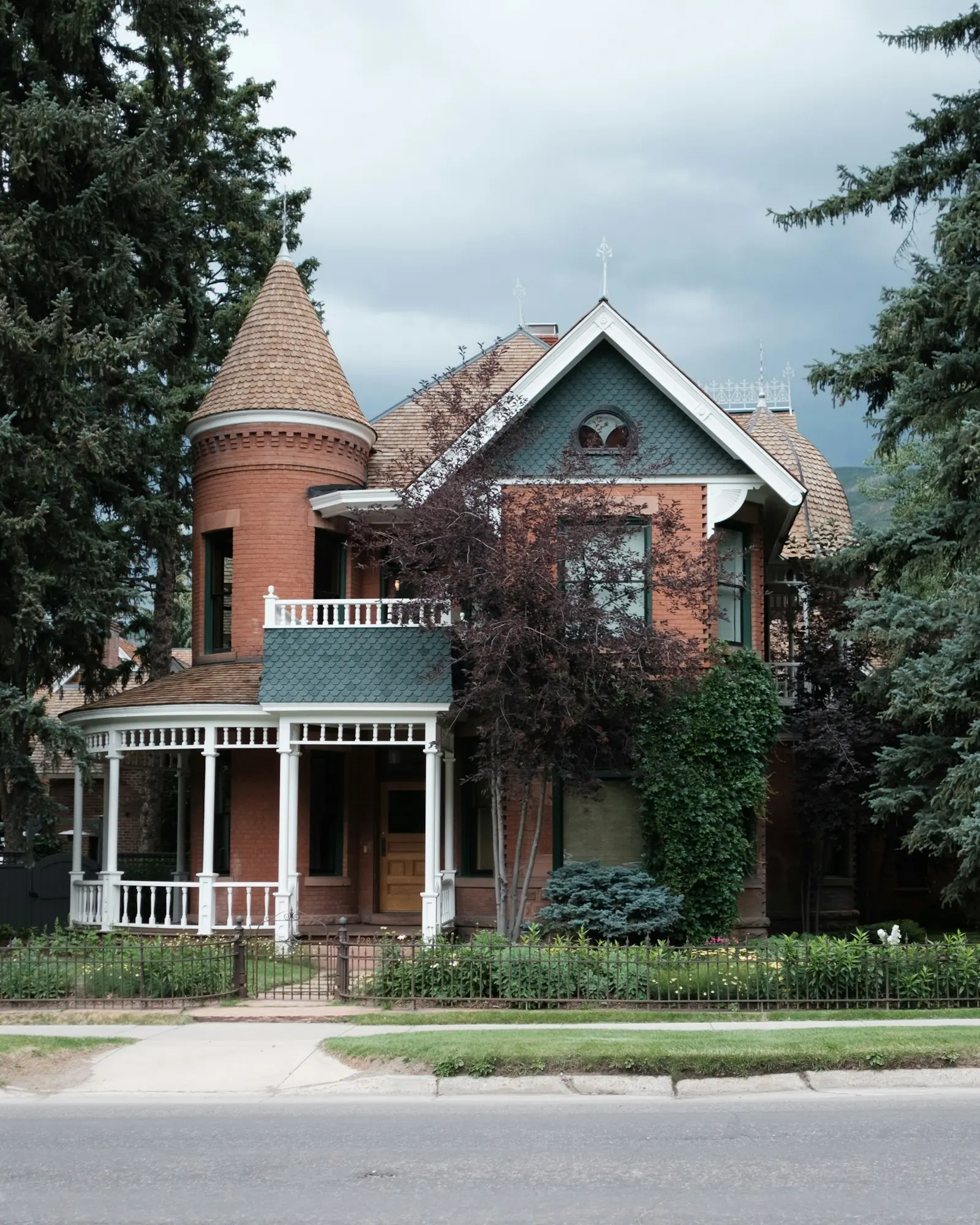
Denver is the oldest housing market in the metro. The Census Bureau's 2024 survey counts about 61,000 homes built in 1939 or earlier, 16.9 percent of the city against 7 percent for Colorado, and another 17 percent built from 1940 to 1959. Brick runs through all of it. After the April 1863 fire downtown, Denver passed an ordinance requiring brick or stone construction, and the Denver Squares, bungalows and cottages of Capitol Hill, Highland, Congress Park and Washington Park were built with brick chimneys to match.
Those chimneys were built for coal and wood. Today gas heats about 61 percent of Denver homes and electricity most of the rest, so many old flues now vent a gas furnace or water heater, or nothing at all. Newer Denver, from Central Park to the condos downtown, mostly has gas fireplaces with metal vents. At the free inspection we check every flue from the roof and from inside, take photos and write down the price of any work before it starts.
Old brick in Capitol Hill, Highland and Washington Park
The Denver Square, two stories with a hipped roof and a front porch, went up across Capitol Hill, Highland, Park Hill and Washington Park from the 1890s, followed by the bungalow. After a century, the usual findings are a cracked crown, mortar washed out of the top courses, flashing that has been tarred over, and clay flue tiles with open joints, or no liner at all. NOAA's normals count about 135 freeze-thaw days a year at Denver-Stapleton, and each one works water deeper into old brick.
Typical ranges: repointing $500 to $2,500, crown $600 to $2,200, flashing $300 to $1,800, rebuilding the top few courses $1,000 to $3,500, and a stainless liner $1,500 to $5,000. On soft old brick we use a mortar that matches, not a hard modern mix.
Denver landmarks and historic districts
Denver's Landmark Preservation staff, its Landmark Preservation Commission and the Lower Downtown Design Review Commission review the design of all exterior projects that need a building or zoning permit at individual landmarks and in historic districts. Residential districts include Potter Highlands, Witter-Cofield, Baker, Country Club, Wyman, Swallow Hill and Humboldt Street, among dozens of others.
Like-for-like repointing or a crown replacement usually changes nothing you can see. Rebuilding a chimney in a different shape or brick, or taking one down, is the kind of change that goes through review when a permit is needed. If your house is in a district, we check with you before scheduling that kind of work.
Denver's burn-day code and the hail
Denver's code makes it unlawful to run an unapproved wood fireplace or stove on a high-pollution day, with a fine of $250 minimum and up to $2,000 per violation per day. Anything sold or installed in the city must be certified, and a new home or addition may have only one solid-fuel device. Gas fireplaces are not covered. An open fireplace fitted with gas logs, typically $500 to $2,000, can be used on Action Days.
Hail is the other Denver problem. The May 8, 2017 storm over Denver and Lakewood caused about $2.3 billion in damage. We check caps, chase covers and crowns and photograph damage for your insurance adjuster.
Where we work in Denver
Capitol Hill · Cheesman Park · Congress Park · Highland · West Highland · Berkeley · Sunnyside · Washington Park · Platt Park · Baker · Park Hill · Country Club
FAQ
Denver chimney questions
Our Capitol Hill house hasn't used its fireplace in years. Is it safe to light?
Not until it has been checked. An old chimney can have cracked flue tiles, open joints, nests or debris. We inspect it for free, show you photos and tell you whether it is safe to use and what any repair would cost.
What is the fine for burning wood on a no-burn day in Denver?
Denver's fine schedule sets $250 minimum and up to $2,000 per violation per day for running an unapproved wood fireplace or stove on a high-pollution day. EPA Phase III stoves and inserts and approved pellet stoves are exempt, and gas fireplaces aren't covered.
Can I add a wood fireplace to my Denver home?
Only a certified device. Denver's code says anything sold or installed in the city must be certified, and a new home or addition may have one solid-fuel device. A gas insert or gas logs are the simpler route.
How much does a chimney cleaning cost in Denver?
We price the cleaning at the free inspection, once we've seen the flue and how much buildup there is. You get the price in writing before we start. We book Sunday to Friday in 3-hour windows and call to confirm.
Book online
Book in Denver. The inspection is free.
Free inspection in a 3-hour window: 8 to 11, 11 to 2, or 2 to 5. We call to confirm before we arrive.